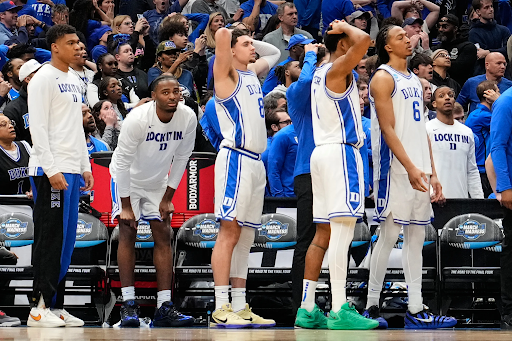
Duke basketball is built on a legacy that few programs in college sports can match. From national championships to NBA-bound stars, the standard in Durham has always been clear: compete for titles, especially in March. But after this year’s Elite Eight loss to UConn, that expectation once again collided with a frustrating reality. What was supposed to be another deep tournament run instead became a familiar ending: another Duke collapse on one of the biggest stages.
On paper, this team had everything needed to cut down the nets. Elite recruits, NBA level talent, strong coaching, and depth across the roster made Duke look like a legitimate national championship contender. Early in the tournament, they showed flashes of exactly that. The ball moved smoothly, the defense was sharp, and the confidence was evident. They looked like a team peaking at the right time.
But in the Elite Eight, everything shifted. This wasn’t just a case of shots not falling, it was a complete loss of control. Duke struggled to dictate tempo, allowed UConn to impose its physicality, and looked uncomfortable when the game tightened. Defensive rotations slowed down, offensive possessions became stagnant, and the composure they showed in earlier rounds disappeared. In March, the smallest cracks get exposed quickly, and for Duke, those cracks turned into a collapse.
What makes this loss sting even more is how familiar it feels. Over the last decade, Duke has consistently fielded teams with championship potential, yet the results haven’t matched the expectations. Whether it’s early exits or falling just short of the Final Four, the pattern has become hard to ignore. For a program that once thrived in high-pressure moments, these breakdowns are becoming part of the narrative.
As Kayla Alexander, a senior civil engineering student, put it, “it just feels like every year y’all have the talent to win it all, but something always slips away when it matters most.”
Duke hasn’t lacked talent if anything, they’ve had an abundance of it. But talent alone doesn’t win in March. The evolution of college basketball has made experience, chemistry, and execution just as important. The one-and-done era has brought elite players through Durham, but it has also made it difficult to build continuity. Teams like UConn, who have established systems and veteran leadership, often look more composed in these moments.
That difference showed. While UConn stayed poised, Duke looked rattled. Possessions became rushed, decision-making faltered, and opportunities slipped away. There were moments where Duke could’ve seized control, key defensive stops, chances to extend runs, but they didn’t capitalize. At this level, those missed chances define the outcome.
Championship teams don’t just rely on talent, they rely on trust, discipline, and composure. They stick to their identity when the pressure rises. Duke, in this game, didn’t.
For fans, the frustration goes beyond just one loss. It’s the accumulation of missed opportunities over the years. Each season brings new hope, new stars, and new expectations of returning to the top. But each March that ends short only adds to the growing sense that something is missing.
Senior kinesiology student Isaiah Williams had this to say, “Duke hasn’t been to the National Championship in ten years even with all the star-studded teams they’ve had. This game just showed there’s still a gap between where they are and where they’re supposed to be.”
The program isn’t going anywhere. The brand is still powerful, recruiting remains elite, and the foundation is strong. But if these postseason struggles continue, there will have to be real evaluation. Is it roster construction? Late-game execution? Mental toughness? Or is it a combination of all three?
One thing is certain the expectations won’t change. Every year, Duke will enter March with the goal of winning it all. But until they prove they can execute in those defining moments, losses like this will continue to shape the story of the program.
For now, it’s another season ending too soon. Another opportunity lost. And another reminder that in college basketball, greatness isn’t just about potential—it’s about finishing when it matters most.