Hollywood has always thrived on human performance.
Now, with artificial intelligence entering the scene, the industry faces a big question that feels like something from a sci-fi movie: Are AI actors the end of Hollywood or the next step forward?
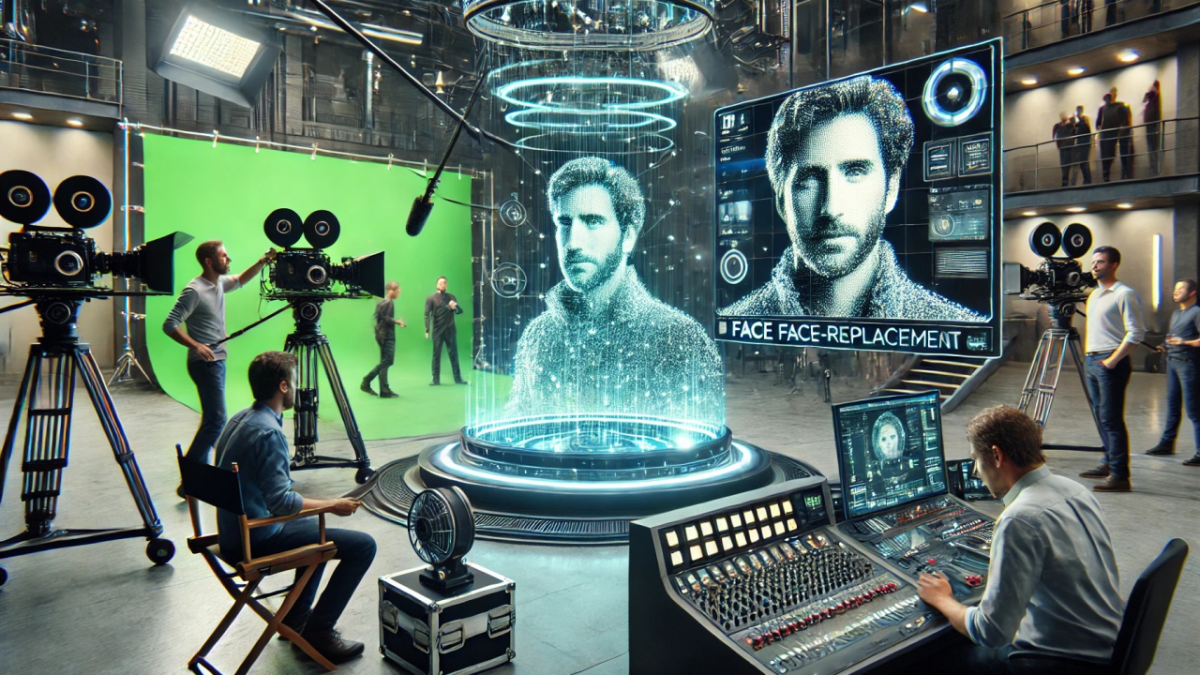
Recently, film studios have begun testing with AI-generated characters, some modeled after real actors and others entirely synthetic.
“AI can accurately copy facial expressions, speech patterns, and emotional nuance,” according to Variety.
“Major studios have already used AI to de-age actors, replicate voices, and film crowd scenes without hiring hundreds of extras.”
To some, this innovation can represent progress. It allows filmmakers to push creative boundaries, resurrect historical figures, and produce large-scale projects more quickly and cheaply.
Kira Johnson, a senior studying multimedia journalism, depends on interviewing people for her news stories.
For her class assignments, she talks with both citizens and students. She also has concerns about the rise of AI.
She says, “I think AI taking over real actors is honestly scary and quite disturbing. I believe AI should make our lives easier, but I don’t think AI should replace art that expresses human emotions and experiences.”
Independent creators who once struggled with tight budgets can now make realistic films without massive crews or sets (Forbes, 2024).
AI copies can now keep acting long after the real person is gone. This phenomenon causes us to wonder, who owns an actor’s digital self?
Should studios be able to use someone’s image without asking them? Critics worry that AI actors could take away the human touch, the special spark that makes performances stand out.
According to mass media student Sydney Henry, “I don’t like the idea of AI actors taking over because acting is something we watch on TV to feel real emotions and to connect with real people. Having robots perform just doesn’t feel natural and takes away that authenticity.”
Hollywood faces a big decision, if it rejects AI, it could miss out on a powerful new creative tool.
Senior pre-law student Shamia Noel agrees and says, “How are we supposed to feel for and relate to AI actors? Right now AI is replacing a lot of things.”
The best way forward could be to find a balance, using AI to support human creativity without replacing it.
Actors might license their digital doubles for specific, clear uses and earn royalties while staying in control.
Directors could use AI to plan out complicated scenes, make movies more accessible, or make sets safer.
AI will not end Hollywood right away, but it will definitely change it. The industry’s future depends on how it adapts, both in terms of technology and ethics.
Whether AI actors signal Hollywood’s decline or a new beginning comes down to one thing: keeping people at the center of storytelling.
Overall, no matter how advanced technology gets, audiences connect with emotion, not just with artificial humans.