The Super Bowl halftime show is one of the most anticipated moments of the NFL season. This is evident as according to the NFL, the views for this Super Bowl half time performance set a new record as it reached four billion views just 24 hours after the performance.
When it was announced that Benito Antonio Martinez Ocasio, otherwise known as Bad Bunny, would be performing, the news sparked an uproar of mixed emotions.
While the decision was celebrated by many, it was questioned by others because he is a predominantly Spanish-speaking artist.
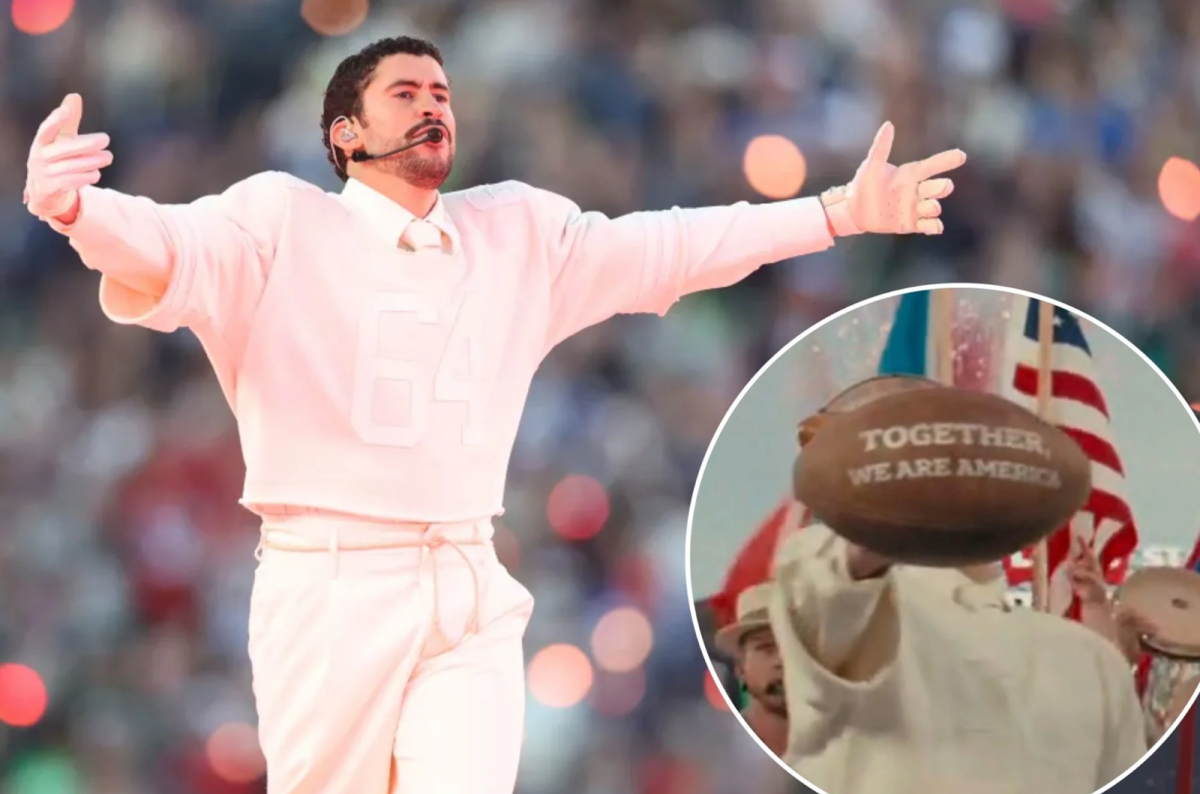
From the start of his performance, it was clear that he was there to make a statement.
Bad Bunny opened with a young man wearing a pava, which is a traditional Puerto Rican straw hat, stating, “Que rico es ser latino” which, according to Latino Pop magazine, means “How wonderful it is to be Latino.”
This moment set the tone, as it made it clear that Bad Bunny had no issue with being loud and proud about his culture and he was not going to dilute it to fit the wants of conservatives.
This performance had a significant impact on Latinos including Patrice Benson, a junior computer science student.
“From the perspective of a half Dominican girl,… It showed the history of the Great Migration of Puerto Ricans to New York City, how underfunded the entire country of Puerto Rico is, and how Latinos come in all colors.”
Every step of the performance, from the visuals to the song choices and the things he said between songs – every detail had meaning. Prior to Lady Gaga’s performance, Bad Bunny started performing “Monaco.”
The opening line is “Dime (dime), dime, ¿esto es lo que tú quería’?” which, according to GENIUS, translates to “tell me (hey; tell me), tell me, this is what y’all wanted?”
This question was intentional, as he pointed at the camera while asking it. It was a reference to those who were consistently stating that Bad Bunny is not what they wanted.
Following the rhetorical question, a traditional wedding scene was shown. Subsequently, Gaga appeared singing “Die With A Smile.”
Although she is singing in English, the band transitioned to a salsa rhythm, and Gaga began to salsa dance.
Instead of replacing the culture established by Bad Bunny, she blended Latino culture with American culture.
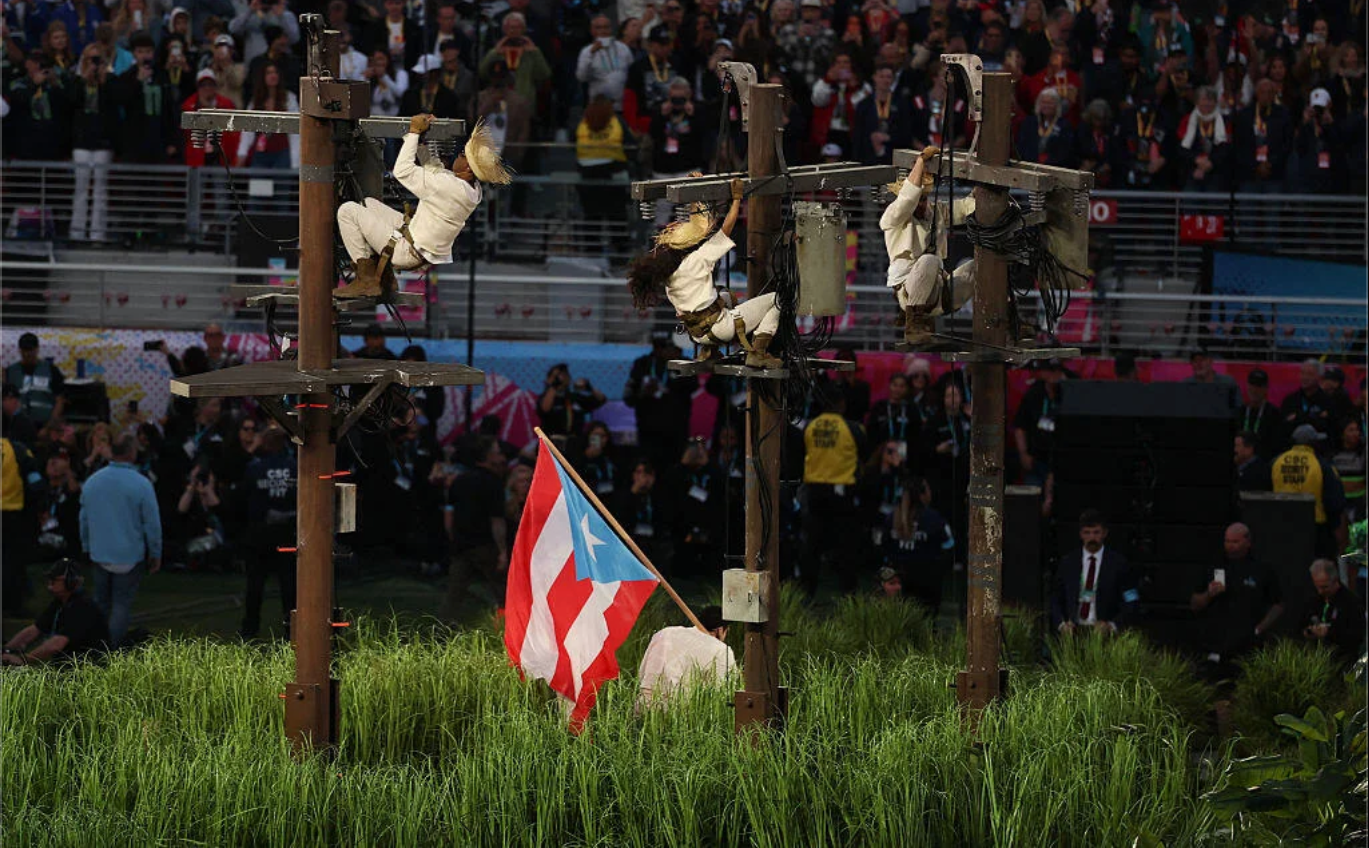
The message became clearer later on in the show during Bad Bunny’s performance of “El Apagon,” translating to “the blackout” or “the power outage.”
Wulwyn Porte, junior journalism student, did not originally understand what was happening. Still, when asked about the performance, he expressed the importance of going back to get a better understanding.
“When you go back and read the transcription, he talks about a lot of important things. He mentioned the role that the US has played in Puerto Rico and the recurring power issues that they have been facing,” Porte said.
According to USA Today, Puerto Rico has been experiencing repeated power outages since Hurricane Maria in 2017.
Additionally, the song addresses the appropriation of Latino culture. It delves into how people want to embody Latino culture without understanding where it originated.
Bad Bunny’s performance was full of images, songs, and people that allude to different parts of history. These are only some of those.
Nia McInnis, senior political science student, understood the power of his performance without understanding Spanish.
“Bad Bunny was showing the power of music. It transcends language and everyone can be apart,” McInnis shared. Without translating his songs, Bad Bunny made a difference, he united people all over the world.
To conclude his performance, Bad Bunny said “God Bless America” before naming every country in the Americas and singing one of his most popular songs, “DtMF,” which paid homage to his homeland of Puerto Rico.
Bad Bunny’s performance sparked numerous hateful reactions. One coming from the President of the United States.
According to CBS, President Trump stated, “The Super Bowl Halftime Show is absolutely terrible, one of the worst, EVER.”
Despite heavy criticism, he remained true to himself, his country, and Latinos everywhere. He did not translate every lyric or compromise his identity, he delivered a performance based on authenticity.
In a time where we are divided based on numerous factors, whether it is age, race, or gender, it is important that we remain united.
Bad Bunny had one lasting message that is essential to remember, especially in our current society: “The only thing more powerful than hate is love.”