
This year, Black excellence took center stage at the Oscars.
From performers on screen to work behind the camera, 2026 puts Black filmmakers, actors and designers in the spotlight, with talent making its mark in record-breaking ways.
Leading this historic moment was filmmaker Ryan Coogler. His film “Sinners” broke records with 16 Oscar nominations, surpassing classics like “All About Eve”, “Titanic” and “La La Land”, which each held 14 nominations.
Many say this milestone not only cements Coogler in the film industry, but also shows that Hollywood is starting to recognize more diverse voices and stories.
“I think the 16 nominations are merited, I think it was the first movie to lay the groundwork for good movies that came out after. It’s been a good year for movies and I think “Sinners” stands on its own,” said Edwin Moye, a journalism professor at N.C. A&T.
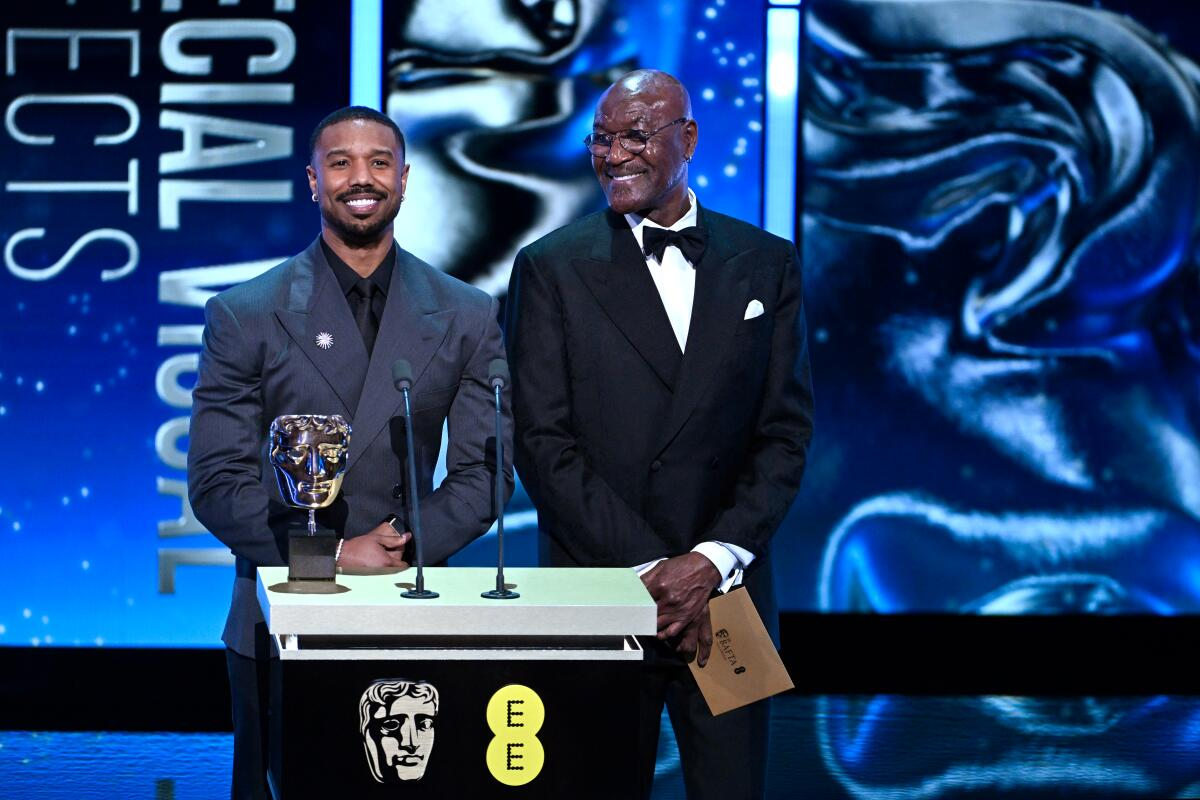
Among the film’s standout cast, Michael B. Jordan earned his first Oscar nomination for Best Actor in a Leading Role for “Sinners”.
Jordan delivers a performance full of emotion, taking on the challenge of playing twins and giving two distinct characters at the same time.
Known for his performances in “Creed,” “The Wire,” and “Black Panther,” his work has impressed both audiences and Academy voters.
The supporting acting categories also feature remarkable talent. Wunmi Mosaku, Teyana Taylor, and Delroy Lindo each received their first Oscar nominations.
Mosaku is recognized for her role in “Sinners,” Taylor for her performance in “One Battle After Another,” and Lindo for his work in “Sinners.”
Their performances show a range of skill, reflecting both emerging and long-established talent in film.
However, not all viewers see nominations as purely merit-based. Bryce Joseph, a physics student, questioned the integrity of the voting process.
“I think the Oscars, to some extent, are rigged,” said Joseph. “I think that the judging at the Oscars all have some sort of connection with each other, so it’s less about what movies are actually good and more about ‘the elites’ trying to boost each other.”
Behind the camera creatives have also made an impact.
Ruth E. Carter, the most nominated Black woman in Oscar history, received a nomination for costume design for “Sinners,” and continues to be one of the most influential costume designers in the industry.
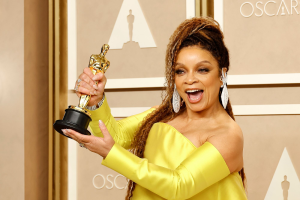
Hannah Beachler earned a nomination for Production design, creating the film’s visually appealing world.
Shunika Terry alongside Ken Diaz and Mike Fontaine received a nomination for makeup and hairstyling, showing how key hair and makeup are in bringing a story to life.
With the film’s success, music and writing played a major part.
Raphael Saadiq received a nomination for his original song “I Lied To You,” while Ryan Coogler earned nominations for original screenplay and directing, making him the seventh Black filmmaker ever nominated for the directing Oscar.
Many are rooting for Coogler this year, especially for the “Original Screenplay” and “Best Picture” categories.
“I sincerely hope that Ryan Coogler wins for Best Original Screenplay or Best Picture… I feel it says a lot about who we are as a society that we’ve not yet had a Black screenwriter win Best Original Screenplay,” says Contia Prince, a journalism and mass communication professor.
“For him to win for a film that was not only critically successful, but commercially successful, would say a lot. I think it would make a big statement about Black writers and being recognized with everyone else in Hollywood.”
“Sinners” earned a Best Picture nomination, with producers Zinzi Coogler, Ryan Coogler, and Sev Ohanian receiving credit.
These nominations not only celebrate the movie’s success but also show the talent, vision, and hard work of those who have broken barriers and opened doors.
In the documentary category, Christalyn Hampton and Geeta Gandbhur were recognized for “The Devil Is Busy”. The film offers an inside look at the daily struggles of staff at an Atlanta reproductive health clinic during protests and post-Roe v. Wade overturning restrictions.
This year, the Oscars highlight the power of storytelling and how important diverse voices are in shaping the future of film.